Alloy Identification
Determine alloy families and likely grade matches from elemental chemistry.
Independent laboratory-grade alloy identification using advanced XRF spectroscopy.
Laboratory XRF spectroscopy
Non-destructive analysis
Professional reports
Services
Clear XRF answers for unknown metals, incoming material checks, PMI, and documentation without a heavy testing program.
Determine alloy families and likely grade matches from elemental chemistry.
Confirm that received or installed metal matches the required specification.
Receive clear chemistry summaries with alloy match notes and confidence context.
Support procurement, receiving, fabrication, and QA workflows with traceable testing.
Identify chemistry mismatches that can contribute to cracking, wear, or corrosion.
Screen suspect parts, raw stock, and collectibles for unexpected or substituted alloys.
Equipment
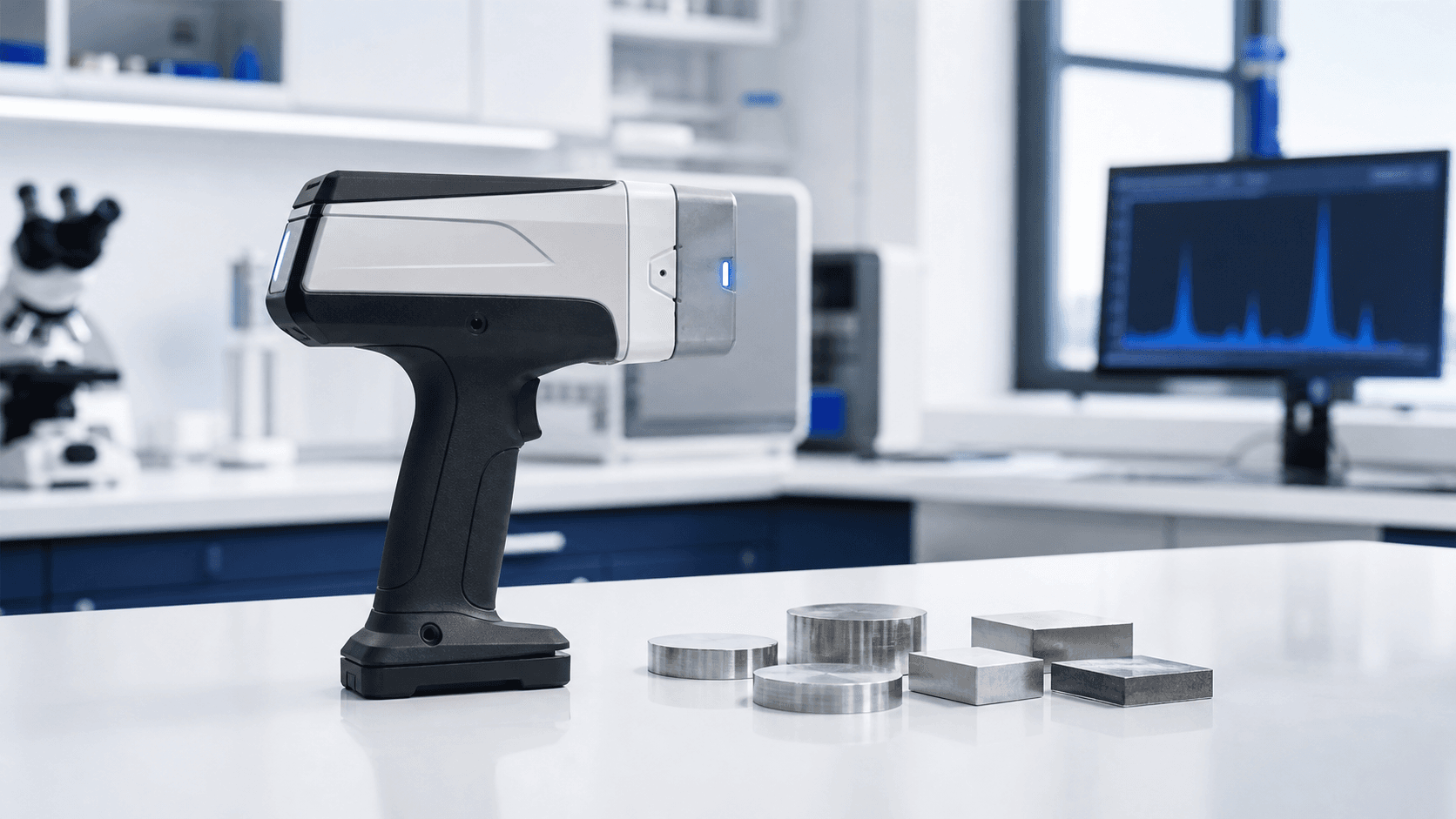
X-Ray Fluorescence spectroscopy provides fast, non-destructive elemental chemistry for metal samples, parts, tools, stock, artifacts, and components. Nashville Alloy Analysis pairs advanced instrumentation with repeatable lab practice and professional reporting.
Non-destructive testing on most clean metal surfaces
Seconds per scan for rapid screening and repeat checks
Elemental chemistry for alloy grade comparison
Hundreds of alloy libraries across common metal families
Repeatable methodology for consistent, defensible results
Professional reports suitable for QA and documentation
How It Works
The process is built to be easy for one-off samples and reliable enough for recurring engineering and quality work.
Mail, drop off, or schedule qualified on-site work.
The sample is scanned using calibrated XRF methodology.
Elemental results are compared against alloy libraries.
You receive a clear summary with match context.
Why Nashville Alloy Analysis
The lab is designed for clients who need practical, defensible answers without the friction of a large testing program.
Objective results from a lab focused on materials analysis, not material sales.
Modern analytical instrumentation, controlled methods, and readable documentation.
Typical turnaround is 1-3 business days, with expedited options for urgent work.
Sample Report
Each report summarizes the alloy match, confidence context, measured elements, and practical interpretation so results can be shared with teams, customers, or records.
Sample ID: NAA-26-0417-A | Method: XRF alloy library comparison
Confidence
97.8%
Alloy Match
AISI 316 Stainless
Result
Chemistry consistent
| Element | Name | Measured Composition |
|---|---|---|
| Fe | Iron | 67.21% |
| Cr | Chromium | 16.84% |
| Ni | Nickel | 10.14% |
| Mo | Molybdenum | 2.08% |
| Mn | Manganese | 1.21% |
| Cu | Copper | 0.19% |
| Zn | Zinc | <0.01% |
Interpretation: measured chromium, nickel, and molybdenum levels are consistent with 316 stainless steel. Surface condition and sample geometry should be considered when comparing trace values.
Industries
XRF testing is useful wherever metal identity matters: specifications, provenance, quality assurance, restoration, recycling, research, and procurement.
Contact
Share what you need tested, how many samples you have, and whether you need documentation for QA, engineering, purchasing, restoration, or personal identification.